EquipmentEquipmentTutorialsPhotography
Complete Guide to Studio Lighting Setup
The Creative Yard Team
••10 min readComplete Guide to Studio Lighting Setup
Professional studio lighting is the foundation of great photography and videography. This guide covers everything you need to know about setting up studio lights for different scenarios.
Types of Studio Lights
Continuous Lights
- Always on, easy to see results
- Great for video and beginners
- LED panels are energy efficient
- Can get hot during long sessions
Strobe/Flash Lights
- Powerful bursts of light
- Freezes motion effectively
- More power for less heat
- Requires sync with camera
Basic Lighting Setups
Three-Point Lighting
The classic setup for portraits:
-
Key Light (Main Light)
- Positioned 45° from subject
- Primary light source
- Creates the main shadows
-
Fill Light
- Softer than key light
- Reduces shadow contrast
- Positioned opposite key light
-
Hair/Rim Light
- Behind subject
- Separates from background
- Creates edge definition
Butterfly Lighting
- Key light directly in front, above
- Creates butterfly shadow under nose
- Flattering for portraits
- Classic beauty lighting
Rembrandt Lighting
- Key light at 45° angle
- Creates triangle of light on cheek
- Dramatic and artistic
- Named after the painter
Light Modifiers
Softboxes
- Soft, even light
- Great for portraits
- Reduces harsh shadows
- Various sizes available
Umbrellas
- Quick setup
- Soft, diffused light
- Budget-friendly option
- Less control than softboxes
Beauty Dishes
- Soft but directional
- Popular for fashion/beauty
- Creates catchlights
- Professional look
Grids and Snoots
- Control light direction
- Create focused beams
- Add drama and interest
- Prevent light spill
Lighting Ratios
Understanding light ratios helps you control contrast:
- 1:1 - Equal key and fill (flat, even)
- 2:1 - One stop difference (soft, natural)
- 4:1 - Two stops difference (dramatic)
- 8:1 - Three stops difference (very dramatic)
Color Temperature
- Daylight: 5500K - Neutral white
- Tungsten: 3200K - Warm, orange
- Mixed: Can create color casts
- Gels: Add color for creative effects
Practical Tips
- Start Simple: Master one light before adding more
- Use a Light Meter: Ensures consistent exposure
- Test Shots: Take test shots before the real session
- Position Matters: Small movements make big differences
- Background Separation: Light background separately
Common Scenarios
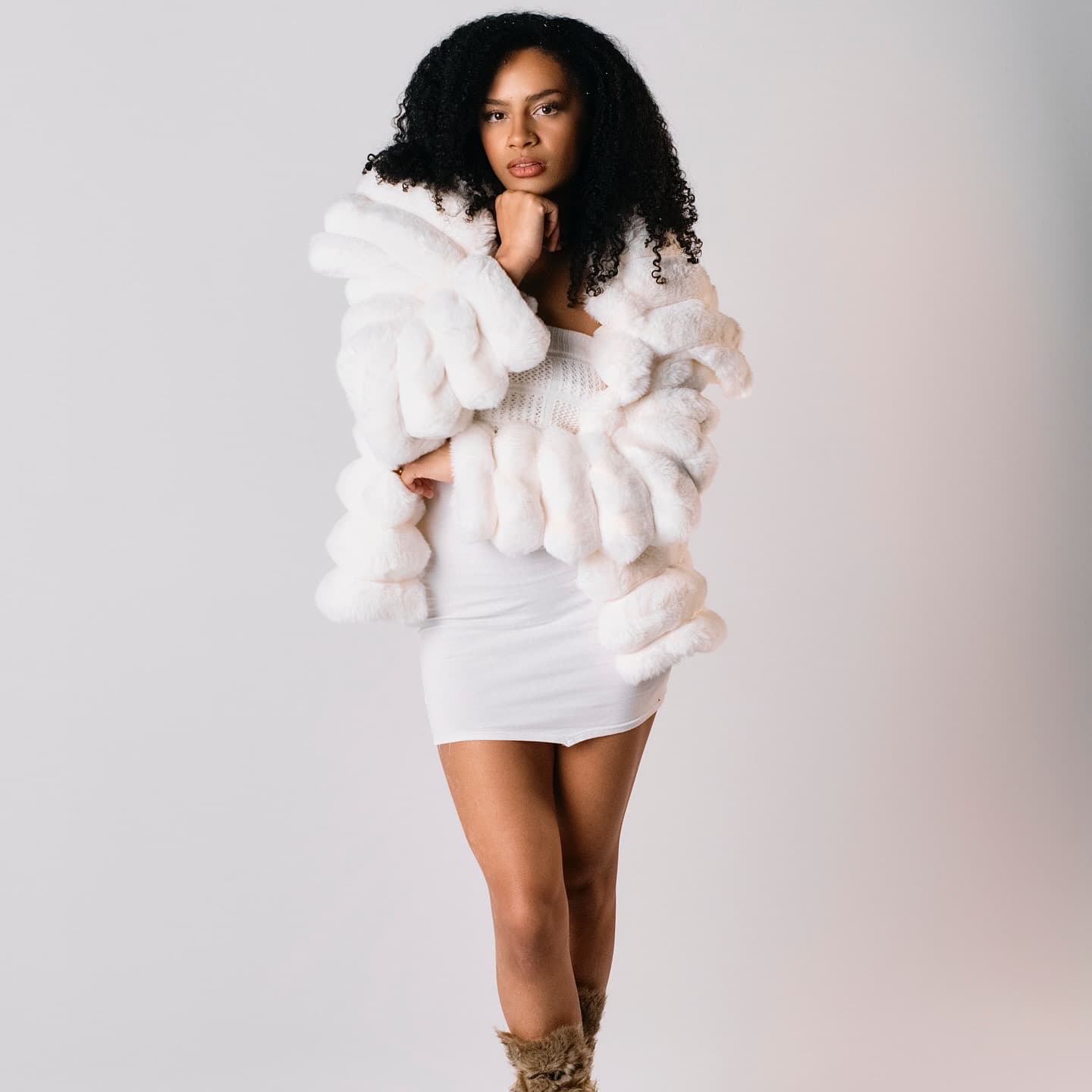
Portrait Photography
- Three-point lighting
- Soft, flattering light
- Catchlights in eyes
- Even skin tone
Product Photography
- Even, shadowless lighting
- Multiple angles
- White or colored backgrounds
- Highlight product details
Video Production
- Continuous lighting
- Even illumination
- Avoid flicker
- Consistent color temperature
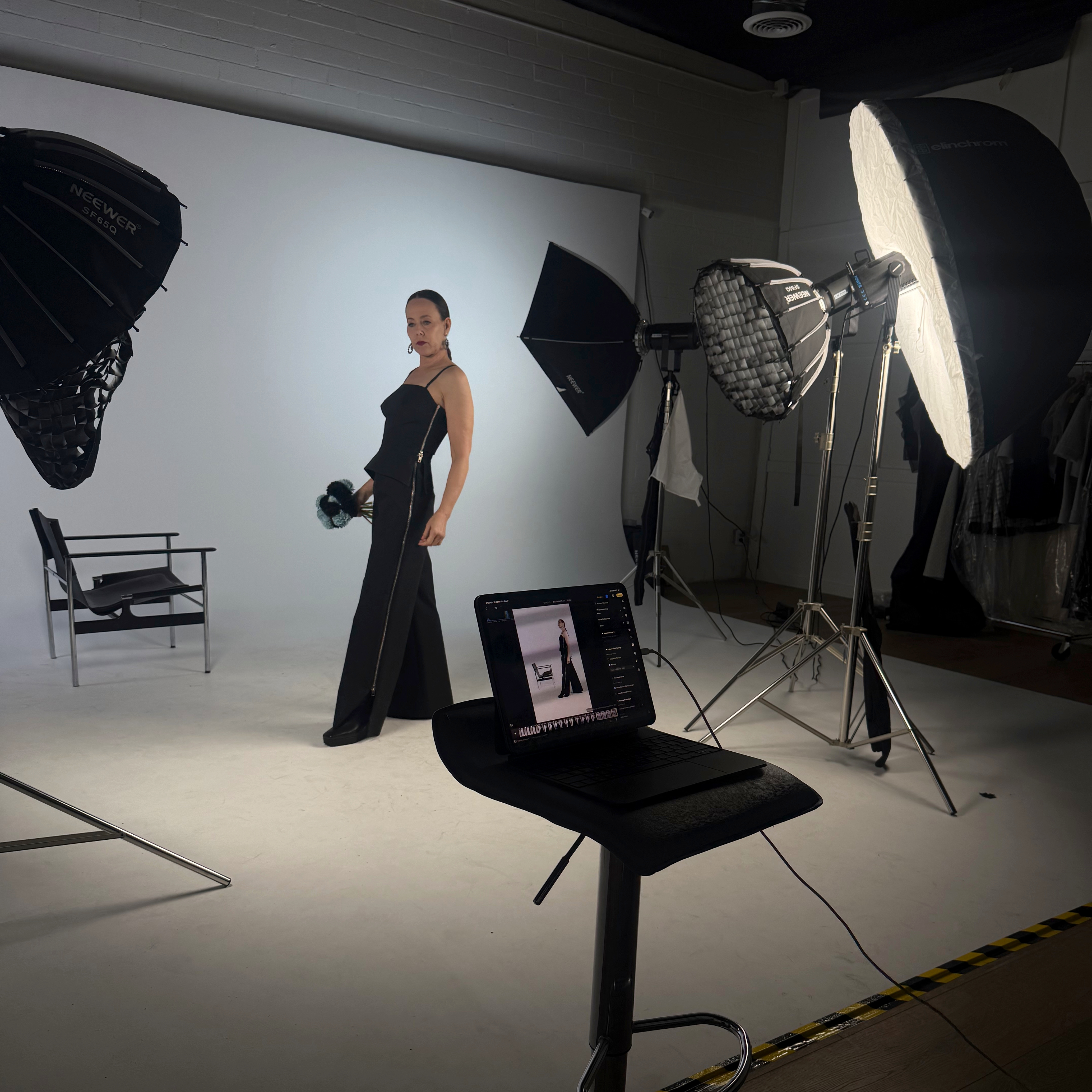
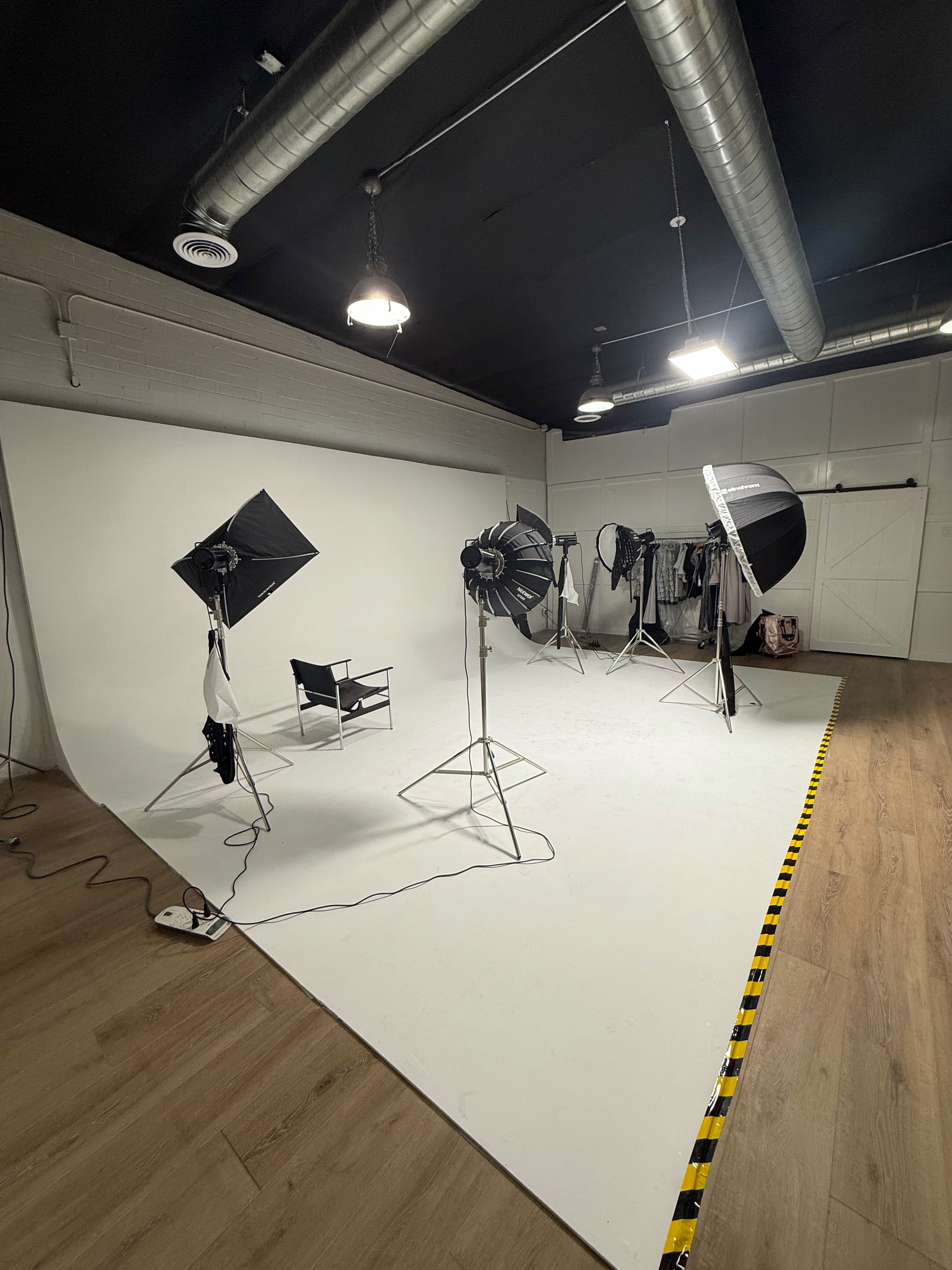
Equipment at The Creative Yard
Our studio includes:
- Continuous LED lights (Bi-color & RGB)
- Various modifiers (softboxes, umbrellas, beauty dishes)
- Grids & Spotlight Snoot
- Light stands and C-stands
- V-Flats
Ready to master studio lighting? Book a session and practice with professional equipment.